You cross your legs when you sneeze. You map every bathroom before you sit down at a restaurant. You’ve quietly stopped going to exercise classes because you’re afraid of leaking. You pack extra underwear. You’ve adjusted your whole life around a problem you’ve never told your doctor about.
You are not alone. Not even close.
More than 61% of adult women in the United States experience urinary incontinence — that’s over 78 million women. Yet the overwhelming majority never seek treatment, assuming leakage is just a normal part of getting older, having babies, or going through menopause. It isn’t. It’s a treatable condition. And acupuncture, with a growing body of clinical evidence behind it, is one of the most effective and least invasive options available.
At our Palm Coast integrative practice, we treat urinary incontinence in women every week. This blog is the real conversation about it — the one most women deserve to have with a provider who takes it seriously.
The Scale of the Problem — And the Silence Around It
Urinary incontinence (UI) is defined as the involuntary loss of urine. It ranges from occasional small leaks to complete inability to control the bladder — and it exists on a spectrum that affects women of every age, background, and life stage.
Consider these numbers:
- Over 61% of community-dwelling adult women in the US report some form of urinary incontinence (NHANES 2015-2018)
- More than 40% of women over age 70 are affected
- Urinary incontinence is among the leading reasons women transition to assisted living, with incontinent women facing twice the risk of nursing home admission
- Prevalence exceeds 50% among nursing home residents and rises above 75% among long-term residents
- The majority of affected women never discuss it with a healthcare provider
That last statistic is perhaps the most important. The silence is not because women don’t care — it’s because they’ve been made to feel embarrassed, or have been told this is simply what happens after babies and birthdays. It’s time to change that narrative.
Types of Urinary Incontinence in Women
Stress Urinary Incontinence (SUI)
Leakage triggered by physical activity that increases abdominal pressure — coughing, sneezing, laughing, lifting, jumping, or running. SUI occurs when the urethral sphincter and pelvic floor muscles can no longer maintain closure against that pressure. Childbirth, hormonal changes, and aging are the primary contributors. About 37% of incontinent women have predominantly stress incontinence.
Urge Urinary Incontinence (UUI) — Overactive Bladder
A sudden, intense urge to urinate followed by involuntary leakage before reaching the bathroom. The bladder muscle (detrusor) contracts when it shouldn’t, overriding normal control. Urgency incontinence is strongly influenced by the nervous system and is often worsened by stress, caffeine, and bladder irritants.
Mixed Incontinence
The most common presentation in older women — a combination of stress and urge symptoms. About 31% of incontinent women experience mixed incontinence, which requires a comprehensive approach that addresses both the structural and neurological components.
Overflow Incontinence
Less common in women than men — occurs when the bladder doesn’t empty fully, leading to constant dribbling or leakage. Often associated with nerve damage, certain medications, or anatomical obstruction.
Why Women Develop Urinary Incontinence
Urinary incontinence in women develops from a combination of structural, hormonal, and neurological factors:
- Childbirth: Vaginal delivery stretches and sometimes tears the pelvic floor muscles, fascia, and pudendal nerve. Even women who deliver by cesarean section can develop UI due to the weight of pregnancy on pelvic structures.
- Menopause and estrogen decline: Estrogen maintains the thickness and elasticity of urethral and bladder tissue. As estrogen falls during perimenopause and menopause, urethral closure pressure decreases and bladder lining becomes more sensitive — worsening both stress and urge incontinence.
- Aging: Pelvic floor muscles lose mass and strength with age. Connective tissue loses elasticity. Nerve conduction slows. All of these contribute to progressive bladder control challenges.
- Chronic straining: Years of chronic constipation or heavy lifting can stretch and weaken the pelvic floor cumulatively.
- Weight: Excess body weight increases intra-abdominal pressure chronically, accelerating pelvic floor fatigue and descent.
- Neurological factors: Conditions including diabetes, multiple sclerosis, and prior pelvic surgery can impair the nerve signals that control bladder function.
How Acupuncture Treats Urinary Incontinence
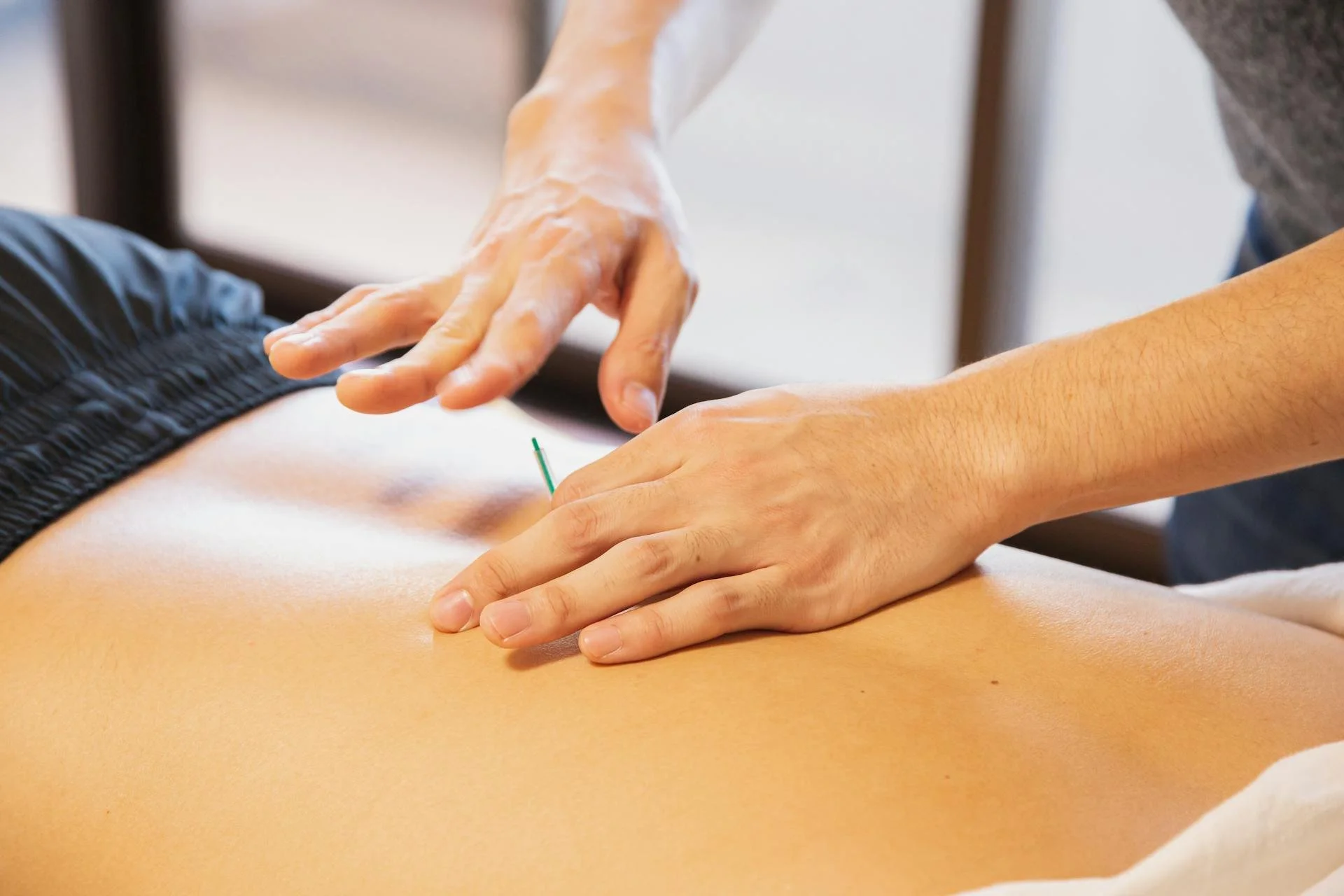
Acupuncture addresses urinary incontinence through several mechanisms that align precisely with its underlying causes:
Sacral Nerve Stimulation
Points BL32, BL33, and BL34 — located over the sacral foramina at the base of the spine — directly stimulate the sacral nerve roots that govern bladder function, urethral sphincter tone, and pelvic floor muscle coordination. Clinical research has confirmed that electroacupuncture at these points produces measurable improvements in bladder capacity, urethral pressure, and leakage volume in women with stress urinary incontinence.
Detrusor Muscle Regulation
For women with urge incontinence and overactive bladder, acupuncture modulates the involuntary contractions of the detrusor muscle by influencing the autonomic nerve pathways that control bladder wall activity. Multiple RCTs have demonstrated significant reductions in urgency episodes and leakage frequency.
Pelvic Floor Muscle Activation
Lower abdominal and inner leg points (CV3, CV4, SP6, SP9) engage pelvic floor musculature, improving the resting tone and functional strength of the muscles responsible for urethral closure. For many women, acupuncture combined with Kegel exercises produces significantly better outcomes than either approach alone — as confirmed in a 2025 meta-analysis of randomized controlled trials.
Hormonal Support
For perimenopausal and postmenopausal women, acupuncture influences the hypothalamic-pituitary-ovarian axis, supporting endogenous estrogen regulation and reducing the severity of genitourinary syndrome of menopause — the cluster of urogenital symptoms that accompanies estrogen decline.
What Does the Research Say?
The evidence for acupuncture in urinary incontinence has strengthened considerably in recent years:
- A 2025 systematic review and meta-analysis published in Frontiers in Medicine confirmed that electroacupuncture — alone or combined with pelvic floor muscle training — significantly reduces urine leakage and improves incontinence scores in women with stress urinary incontinence compared to sham treatment
- A randomized controlled trial protocol published in 2026 in Frontiers in Global Women’s Health is evaluating electroacupuncture’s impact on pelvic floor muscle function using objective surface electromyography and ultrasound — reflecting the growing scientific rigor being applied to this area
- Multiple earlier RCTs and systematic reviews have found acupuncture comparable to or superior to pelvic floor muscle training alone for reducing leakage episodes and improving quality of life scores
This is not fringe medicine. It is an evidence-informed intervention being studied at major academic centers with rigorous methodology.
Frequently Asked Questions
Will I have to talk about embarrassing details?
We ask the questions that help us build the most effective treatment plan — and we do so matter-of-factly, without judgment. Pelvic floor dysfunction is a medical condition, and our team treats it with the same clinical professionalism as any other health issue. Many of our patients tell us our intake conversation was the first time they’d ever spoken openly about their symptoms — and that it was a relief.
Is acupuncture better than Kegel exercises?
For many women, acupuncture combined with pelvic floor exercises produces better outcomes than either alone. Acupuncture helps re-establish the nerve signals that allow Kegel exercises to be performed correctly — many women with pelvic floor dysfunction are not engaging the right muscles when they do Kegels. We often provide guidance on home exercise as part of your overall care plan.
What about medications for overactive bladder?
Anticholinergic and beta-3 agonist medications are commonly prescribed for overactive bladder — but they carry side effects including dry mouth, constipation, cognitive effects in older women, and cardiovascular concerns. Many women prefer a non-pharmacological option, particularly those already managing multiple medications. Acupuncture offers meaningful relief without adding to medication burden.
You don’t have to plan your life around the nearest bathroom.
You don’t have to wear pads forever or avoid things you love.
And you don’t have to move into assisted living before you’re ready.
Real help exists. Our Palm Coast practice is ready to provide it.
Call us today — no referral needed, no embarrassment required.
Part of Our Pelvic Floor Health Series
Return to the pillar blog or explore other topics in this series:
Pelvic Floor Acupuncture: The Complete Overview — Pillar Blog
Chronic Pelvic Pain Syndrome in Men — coming soon
Postpartum Pelvic Floor Recovery — coming soon
Overactive Bladder and Frequent Urination — coming soon
Prostate Health and Acupuncture — coming soon
Perimenopause and the Pelvic Floor — coming soon
Sources
PubMed — Updated Prevalence of UI in Women: 2015-2018 NHANES Data
PubMed — UI and Nursing Home Admission Risk: 2x Risk for Incontinent Women
NIH StatPearls — Prevalence of UI: 50%+ in Nursing Facilities
Frontiers in Medicine (2025) — Acupuncture for Female SUI: Systematic Review and Meta-Analysis
Frontiers in Global Women’s Health (2026) — Electroacupuncture for SUI: RCT Protocol
American College of Obstetricians and Gynecologists — Urinary Incontinence in Women