Getting up twice — or three times, or four times — to urinate at night. The weak stream. The dribbling after you think you’re done. The sense that your bladder never fully empties. The urgency that embarrasses you in public.
These are the everyday realities for millions of men living with benign prostatic hyperplasia (BPH) — an enlarged prostate — and for the men with chronic prostatitis and chronic pelvic pain syndrome who have been told their prostate tests are normal but nothing feels right.
Conventional management offers medications with significant side effects — alpha-blockers that cause dizziness and retrograde ejaculation, 5-alpha reductase inhibitors that reduce libido and cause sexual dysfunction — or surgical procedures that carry their own risks.
Acupuncture offers an evidence-informed, drug-free option that addresses the neurological, muscular, and inflammatory dimensions of prostate-related dysfunction simultaneously. Our Palm Coast integrative practice treats men with prostate-related pelvic floor dysfunction every week. Here is what you need to know.
Understanding BPH and Prostate-Related Urinary Symptoms
The prostate gland surrounds the urethra just below the bladder. When it enlarges — a process that begins for most men in their 40s and accelerates with age — it compresses the urethra and restricts urinary flow. This creates a cluster of lower urinary tract symptoms (LUTS) that includes:
- Urinary frequency — needing to urinate more often than normal, including at night (nocturia)
- Urgency — a sudden, difficult-to-delay urge to urinate
- Weak or intermittent urinary stream
- Straining to begin urination
- Dribbling after urination — the post-void dribble most men find deeply frustrating
- Feeling of incomplete bladder emptying
- Urge incontinence — leaking before reaching the bathroom
Importantly, BPH symptoms are not caused solely by the enlarged prostate itself. The bladder adapts to increased outflow resistance by developing detrusor overactivity — involuntary contractions that produce urgency and frequency even when the bladder is not full. This overactive bladder component persists even when prostate size is reduced, which is why many men remain symptomatic after prostate medications or surgery.
How Acupuncture Helps Men with BPH and Prostate Symptoms
Bladder Overactivity Reduction
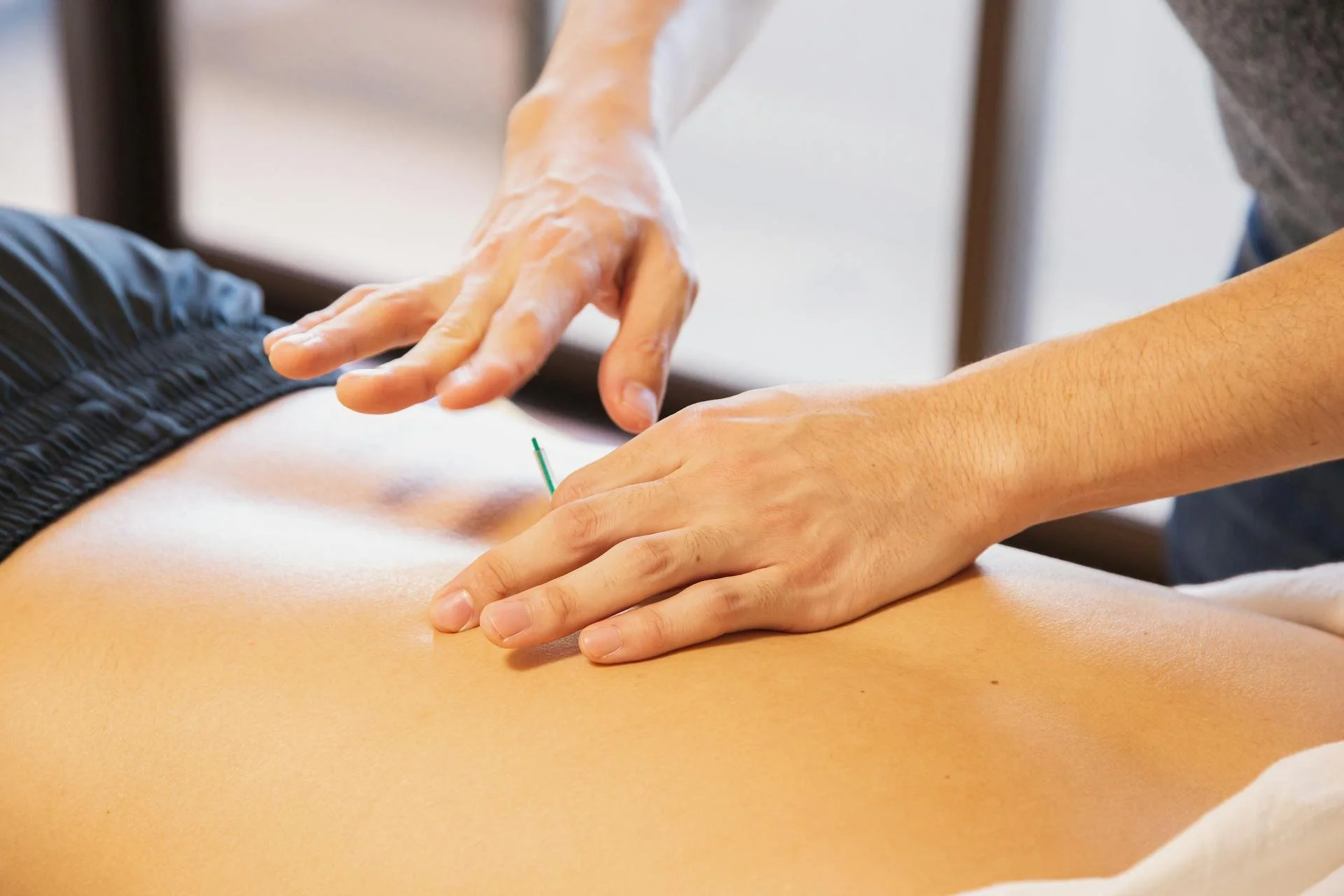
Electroacupuncture at sacral points (BL32, BL33, BL34) directly modulates the nerve pathways governing detrusor muscle activity — reducing the involuntary contractions that cause urgency and frequency. This addresses the OAB component of BPH symptoms that medications alone often fail to resolve.
Pelvic Floor Muscle Coordination
Men with BPH develop compensatory pelvic floor tension — gripping pelvic muscles to hold urine against urgency. Over time this hypertonic pattern worsens dysfunction. Acupuncture normalizes pelvic floor muscle tone, reducing the tension cycle that contributes to post-void dribbling, urgency, and perineal discomfort.
Prostate Inflammation Reduction
Chronic low-grade prostate inflammation is present in most men with BPH and is a driver of symptom severity. Acupuncture reduces systemic and local inflammatory cytokines, reduces prostaglandin activity in prostate tissue, and improves pelvic circulation — creating a less inflammatory prostate environment.
Autonomic Nervous System Regulation
Sympathetic nervous system activity increases urethral and prostate smooth muscle tone, worsening urinary obstruction. This is the mechanism targeted by alpha-blocker medications — but acupuncture achieves autonomic rebalancing without the dizziness, fatigue, and sexual side effects of those drugs.
Pelvic Circulation Improvement
Poor venous drainage in the pelvic region — documented in men with BPH and prostatitis — contributes to prostate congestion and symptom persistence. Acupuncture promotes pelvic vasodilation and improved venous return, reducing congestion in the prostate and bladder neck.
Post-Void Dribbling: A Specific Target
Post-void dribble — the frustrating drop or trickle that appears after a man believes he has finished urinating — is caused by a failure of the bulbocavernosus muscle to fully milk the urethra clear of retained urine. This is a pelvic floor coordination problem as much as a prostate problem, and it responds well to the combination of acupuncture and targeted pelvic floor exercise guidance.
For many men, reduction in post-void dribble is one of the earliest and most appreciated improvements from pelvic floor acupuncture treatment.
BPH, Acupuncture, and Watchful Waiting
For men with mild to moderate BPH symptoms who are managing with watchful waiting rather than medication, acupuncture offers a meaningful opportunity to slow symptom progression, improve quality of life, and potentially delay the need for pharmaceutical intervention. It is an excellent complement to the lifestyle modifications — fluid management, dietary changes, pelvic floor exercises — typically recommended during watchful waiting.
For men already on BPH medications, acupuncture can enhance symptom management, address residual symptoms (particularly OAB and nocturia) that medications don’t fully resolve, and may support dose reduction over time in collaboration with your urologist.
Frequently Asked Questions
Will acupuncture shrink my prostate?
Acupuncture does not directly reduce prostate volume. What it does is address the neurological, muscular, and inflammatory components of BPH symptoms — which often produce significant symptomatic relief even without changing prostate size. For many men, symptom burden is driven as much by bladder overactivity and pelvic floor dysfunction as by the prostate itself.
I've already had a TURP (or laser procedure). Can acupuncture still help?
Yes. Many men continue to have urgency, frequency, and pelvic discomfort after surgical procedures for BPH because the bladder overactivity component was not addressed. Acupuncture is particularly appropriate post-surgically for resolving residual OAB symptoms, supporting healing, and addressing any post-procedural pelvic floor dysfunction.
Should I be concerned about prostate cancer if I'm experiencing these symptoms?
Any new or worsening urinary symptoms in men over 50 should be evaluated by your primary care physician or urologist to rule out prostate cancer, urinary tract infection, or other conditions. We are not a diagnostic facility, and we always recommend that new prostate-related symptoms receive appropriate medical evaluation before or alongside beginning acupuncture treatment.
Prostate symptoms don’t have to define your nights, your trips, or your confidence.
And managing them doesn’t have to mean side effects that trade one problem for another.
Our Palm Coast practice offers men a real, evidence-informed, drug-free approach to prostate-related pelvic floor dysfunction.
Call us today — our team treats men’s health with the discretion and directness you deserve.
Part of Our Pelvic Floor Health Series
Pelvic Floor Acupuncture: The Complete Overview — Pillar Blog
Urinary Incontinence in Women — Published
Chronic Pelvic Pain Syndrome in Men — Published
Postpartum Pelvic Floor Recovery — Published
Overactive Bladder and Frequent Urination — Published
Perimenopause and the Pelvic Floor — coming soon
Sources
American Urological Association — BPH Guidelines and Management
PubMed — Acupuncture for Lower Urinary Tract Symptoms in Men: Evidence Review
PubMed — Acupuncture for Chronic Prostatitis/CPPS: 440-Man RCT